
Title
1. Introduction
1.1. What is title for us?
Titles are the cornerstone of our design system, guiding users through the logical structure of our products and services. They are the prominent elements that help users navigate effortlessly, providing a clear overview of the content and its significance.
The title should be comprehensive, widespread, timeless and powerful enough to underline the subject it covers. Think about how meticulous you are when considering a name for a new-born to your family. You need to think similarly while writing a title for Horizon. Turkish Airlines always prioritizes hospitality. We avoid to raise our voice to users and customers. That’s why we use sentence case while writing titles. Keep capital letters to a minimum except the following patterns — HEADER, FOOTER and MEGA MENU titles.
1.2. What distinguishes a title from a heading?
Despite sharing similar characteristics in clarity, hierarchy, and visual distinction, titles and headings function differently depending on the components they’re used in.
Titles appear mainly in menus, bookers, and some specially defined and differentiated cards.
Let’s take a look at some examples:

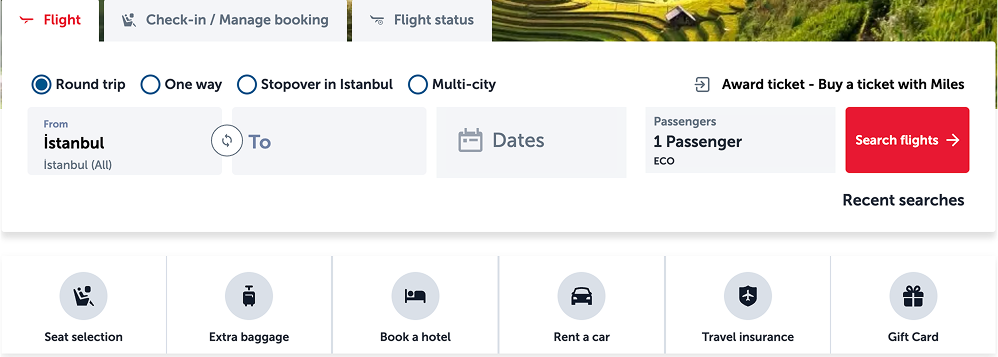

Booker refers to patterns that allow users to make reservations. It is used for activities such as booking airplane tickets, hotels, car rentals, etc. Input fields are the master components of these patterns.
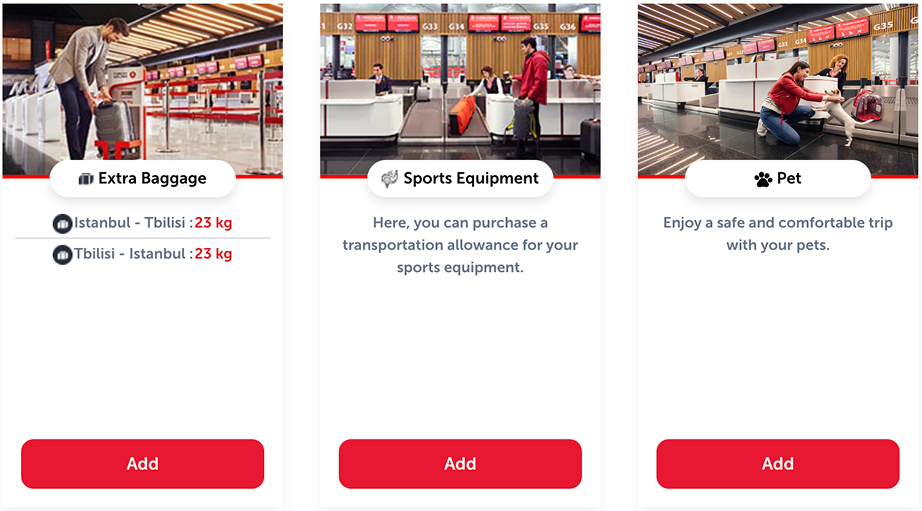




Titles in Breadcrumb
Make sentences and use nouns.
2. Rules while writing a title
2.1. Use titles as noun
A two or three-word noun or a noun phrase always meet the expectations.
Travel Insurance
Hotel Reservation
Travel insurance
Hotel reservation
2.2. May only SEO break the rule above
Only SEO requests can break the principle about nouns. You can use titles as actions depending on your SEO needs. You can stretch it according to really convincing suggestions. What if SEO convinced you? The solution is easy. Use two or three words while narrating the action. Don’t hesitate to use the articles “a/an/the”.
There is no problem as long as you express the action simply and use sentence case.
Just be careful not to make the sentence longer.
1. Book A hotel
2. Rent a Car
1. Book a hotel
2. Rent a car
2.3. Use maximum three words
All the titles don’t exceed three (3) words unless it is a proper noun, product or service name. All stakeholders must reach a consensus on this issue.
2.4. Use of “Miles”
Only SEO requests can break the principle about nouns. You can use titles as actions depending on your SEO needs. You can stretch it according to really convincing suggestions. What if SEO convinced you? The solution is easy. Use two or three words while narrating the action. Don’t hesitate to use the articles “a/an/the”.
There is no problem as long as you express the action simply and use sentence case.
Just be careful not to make the sentence longer.
Earning miles
View your miles
Miles&Smiles’tan miller kazanın
Earning Miles
View your Miles
Mil kazanımı
2.5. Product names
When listing product names in the menu, we use title case to highlight them. They are all proper nouns by nature and we can’t devastate the stars of the show.
Turkish Airlines blog
Miles & Smiles
Turkish Airlines Blog
Miles&Smiles
2.6. Use of puntuations
In titles, let’s skip periods, commas, colons, exclamation points or any other punctuations. Think of it like taking a smoother journey without any turbulences – it just makes your writing clear and straightforward.
First stop: Istanbul
First Stop Istanbul
2.7. Use of destinations
Destinations are written with their local language equivalents in 15 different languages used by Turkish Airlines.
Saint-Etienne
Turin
Saint-Étienne
Torino
2.8. Abbreviations in language section
Among the most frequently used menu tabs is the one for country/region and language selection. Here, we implement a unique approach by utilizing code for this selection. It’s crucial to display these international abbreviation codes in ALL CAPS to enhance their visibility on the page and facilitate user scanning. Use hyphen when separating them.
En-Int
Tr-TR
EN-INT
TR-TR
2.9. Use of ampersand
We reserve the ampersand exclusively for Miles&Smiles and its sub-brands like Shop&Miles or Cash&Miles. In other instances, we avoid using the ampersand and instead start the second word with a capital letter. This keeps things consistent and clear across our branding and messaging. Review also the use of ampersand.
Deals & Destinations
Book&Manage
Shop and Miles
Book and Manage
2. Rent a car
Shop&Miles
2.10. Character limits
Keep it short, clear and concise. 3 words, 25 characters max, in sentence case without using period except HEADER, FOOTER and MEGA MENU titles. This ensures clarity and readability across languages and situations, making it easy for everyone to understand at a glance.