Punctuation
1. Introduction
1.1. What do we mean by punctuation?
Punctuation marks are important in language and should follow standard rules, even outside of regular text. Generally, avoid using punctuation marks in place of words (e.g., “&” instead of “and” or “@” instead of “at”). Additionally, don’t use them as design elements or for purely decorative purposes.
1.2. How to use?
Punctuation rules are essential for clear communication. They help us effectively convey our messages to users. Our usage purposes include:
1.2.1. Emphasizing
The pauses and accents we use in speech to highlight important words and phrases are represented by punctuation marks in written language.
1.2.2. Readability
Punctuation marks are used to make long expressions easier to read and to avoid confusion.
1.2.3. Showing emotions
Signs such as exclamation marks, question marks, and ellipses are very effective in showing emotions.
2. Ampersands
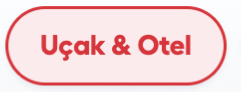
For us, the ampersand represents “Miles & Smiles” and its sub-products, similar to a logo. Unless you’re referring to these, avoid using the ampersand to prevent confusion.
2.1. How to use?
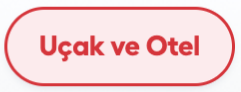
a. To enhance readability, use words and phrases like “and,” “with,” “plus,” “in addition,” and so on instead of “&.”
b. If you don’t have enough space to use words, you may prefer to use plus sign (+) to avoid confusion.
2.2. Brands and sub brands
It’s undeniable that Turkish Airlines prominently uses ampersands in its main and sub-brands. When using brand names with ampersands in user experience writing (labels, descriptions, etc.), please pay special attention to the following principles:
a. Make sure the ampersand is properly designed and included in the Museo Sans font family. If there are any issues, definitely reach out to the UI designer to get it fixed.
b. Never separate the ampersand from the words, whether in plain text or other formats. Make it a habit not to leave spaces around the ampersand.
Miles & Smiles
Tax& Smiles
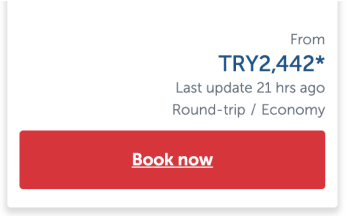
DO &CO
Miles&Smiles
Tax&Smiles
DO&CO
c. Be clear when indicating possesiveness and directly convey what the user owns.
“… Miles&Smiles card.”
“… your Miles&Smiles credit card.”
d. In agglutinative languages (e.g., Turkish), proper names naturally take an apostrophe. Don’t hesitate to use apostrophes in these cases.
3. Apostrophes
Use apostrophes for contractions, possessives, and, rarely, plurals. For joint possession, a single apostrophe is sufficient. If each possessor has their own item, use apostrophes for each.
Please be aware of excessive use of punctuation marks reduces readability. Avoid use unless necessary.
Your business’s growth
Growth of your business
3.1. Contractions
Remember that shorter phrases are easier to read. That’s why you can use the contractions we use in daily speech in writing without leaving our formal tone.
Ain’t
Shan’t
Mustn’t
Y’all
Let’s
We’re
They’ll
It’s
3.2. Possessives
Use apostrophes to indicate possession, placing the apostrophe before the ‘s’ for singular nouns and after the ‘s’ for plural nouns.
Pilot’s
Pilots’
Crew’s
3.3. Plurals
In everyday situations, you don’t need to use apostrophes for plurals. However, you may use them to clarify meaning when writing uppercase abbreviations, single letters, or plural numbers.
Students will take their PPL’s.
There are two p’s in PPL.
Circle all the 2’s on the page.
3.4. Quotes and special cases
Finally, we use apostrophe to quote. We also use it for mentioning important things.
She said ‘’Come here!’’
“Best Airline of 2024” awards
She said ’Come here!’
‘Best Airline of 2024’ awards
4. Asterisks
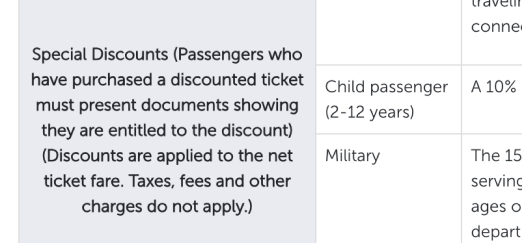
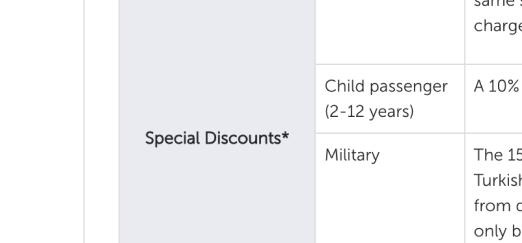
Asterisk is used to show the importance, confidentiality and detailed information of a situation. If an explanation is to be made with an asterisk, an info box should appear under the relevant component.
4.1. How to use?
4.1.1. Explaining or clarifying
Use it when you are going to give an explanation below.
4.2.2. Confidentiality
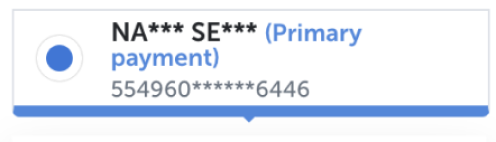
Use for information that must remain confidential and follow the rules while writing.
a. Regardless of the length, the first two letters of the first name, middle name, and last name must always be written, followed by three asterisks.
b. For credit cards, the first six digits and the last four digits are written. The remaining characters are replaced with asterisks.
4.3.3. Importance
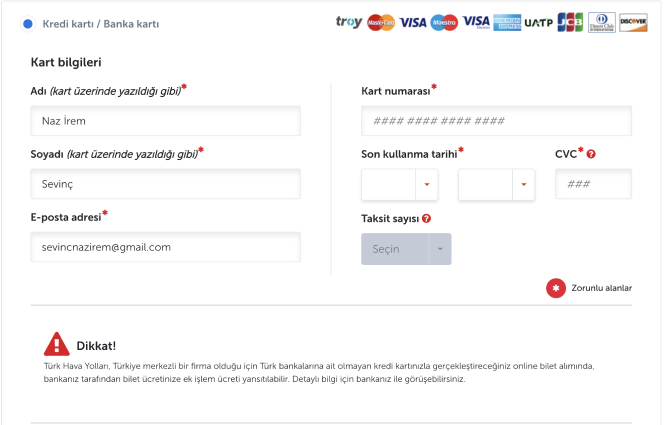
Use to specify mandatory fields to be filled in when receiving information from the user.
5. At signs
We never use this sign except when writing e-mail addresses. In some jargons, it is used instead of the word “at”. But we do not use such humorous language.
5.1. How to use?
6. Brackets
We rarely use Brackets. If you used parentheses in a sentence and need another use in same sentence or paragraph, use them. Or use it when you have such cases;
6.1. Editorial or explanatory notes
Use square brackets to add editorial comments, corrections, or explanations within a quoted text.
6.2. Clarification in quotes
Use square brackets to insert missing words or clarify ambiguous references in a quoted passage.
6.3. Modifying quotations
Use square brackets to modify or clarify the original text in a quotation.
7. Colons
Colons are punctuation marks used to introduce, clarify, or emphasize information.
7.1. How to use?
7.1.1. Introducing a List
Use a colon after an independent clause to introduce a list of items.
Example: “You need to bring the following items: a flashlight, a sleeping bag, and a tent.”
7.1.2. Explaining or clarifying
Use a colon to introduce an explanation, clarification, or elaboration of the preceding clause.
7.1.3. Introducing a quotation
Use a colon to introduce a quotation after an independent clause.
7.1.4. Emphasizing a point
Use a colon to emphasize a point or create a dramatic pause before a conclusion.
For advantageous refunds and fast payment: TK Wallet
One city, three days: Rio de Janeiro
7.1.5. Separating titles and subtitles
Use a colon to separate the main title from the subtitle.
7.1.6. In time
Lastly use a colon to separate hours from minutes in time.
04,30
4:30
4.30
04.30
4:30 PM
4:30 AM
16:30
04:30
8. Commas
Comma spelling can be used differently in each language. It is necessary to look at the language according to its own rules. The rules here apply to English. Use commas to avoid confusion in long sentences.
8.1. Oxford Comma
According to AP Style, we use oxford comma. This means that we use commas before ‘and’ and other conjunctions when listing three or more items.
8.2. Dates in Sentences
When writing the date in sentence, we write the month in words, the day in numbers, and the year separated by a comma. Let’s examine the example. If there is a character limit, months can be written by abbreviating it, please check the abbreviations.
12.02.2024
12,02,2024
12/02/2024
12 February 2024
02.12.2024
February 12, 2024
Feb 12, 2024
8.3. Numbers
When writing in English, separate the thousands digit with a comma. This may differ in other languages. You should consult your local UX Writer. Read more about the numbers.
8.4. Conjunctions
8.4.1. Two Independent Clauses
Place a comma between two independent clauses that can stand alone and are connected by a conjunction (e.g., and, but, or, nor, for, so, yet).
8.4.2. Coordinating Conjunction
Although “then” is not technically a coordinating conjunction, you can use it as one to make sentences flow more smoothly.
8.4.3. Avoiding Overusing Compound Sentences
Indicating a break or a shift in the sentence, adding a dramatic pause.
8.4.4. Replace colons or parentheses
To introduce a list or explanation in a more dynamic way.
9. Dashes
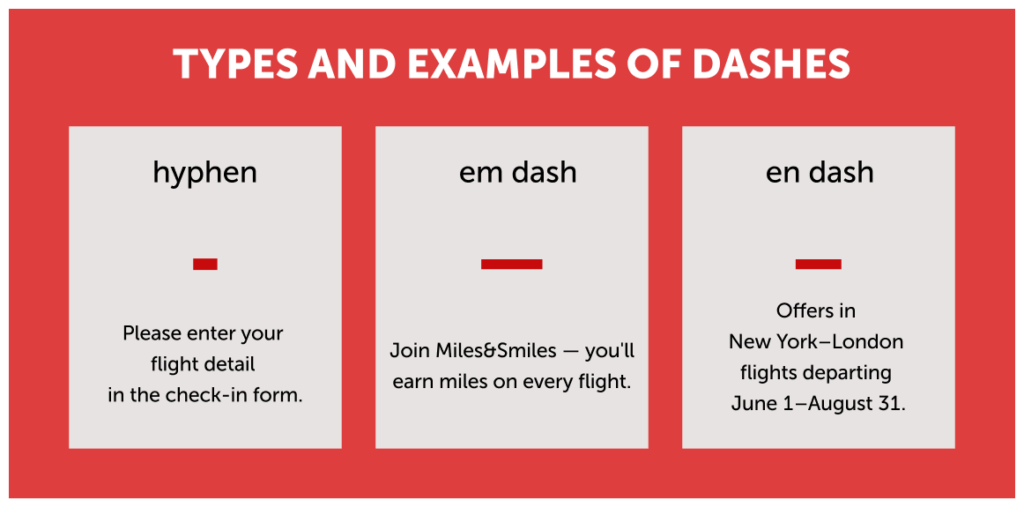
Sometimes hyphens are super handy, especially when we need to show a date or time range in our writing or when enriching expressions. Check out the types of hyphens we use and some examples of how they come into play. Got any ideas? Awesome! Dive into the details below and see how you can make the most of them.
10. Hyphens
Set of rules
- Try not to use hyphens. Try using words instead, such as ‘again’, ‘before’, ‘without’, ‘not’, etc.
- Do not use hyphens with common prefixes like non-, anti-, multi-, and bi-.
- Of course there are some exceptions, such as: e-commerce, e-file, e-pay, multi-user, non-posting, non-sufficient, sub-category.
- For more detailed information on hyphenated words, check the AP Stylebook.
- View also: re- words, pre- words, auto- words, mid- words, non- words.
10.1. Hyphenated words
Air-to-air
Air-to-ground
Check-in
Fly-by-wire
Pre-flight
Runway-in-use
Short-haul
On-time
Step-down
Take-off
Touch-and-go
Turn-around
In-flight
Non-stop
Flight-line
Over-the-top
Built-in
Fly-over
Pilot-in-command
10.2. Writing suggestions
Re-check
Pre-flight
Built-in
Check again
Before the flight
Integrated
10.3. Non-hyphenated words
There are standards and guidelines to follow when writing non-hyphenated words. A content designer should consider ‘compound words’, ‘prefixes and suffixes’, ‘adjective + noun combinations’. The examples below are commonly used and come to mind first. If you feel in doubt, look up the spelling of the word in the AP style guide.
nonrefundable
antibody
antitrust
antivirus
biannual
biennial
copay
coworker
multicultural
multilevel
nonprofit
nontaxable
nonresident
non inventory
online
preassigned
predefined
preexisting
preselected
unpaid
11. Hashtags
You can also see it used under the name ‘Number Signs’. We don’t use this sign much outside of social media. There are also some rules for using social media.
11.1. Set of rules
- Use short and understandable expressions.
- Don’t use special letters are not used when writing in different languages.
- Do not use too many hashtagged words together.
- Use related words to the content of the post.
12. En dashes
12.1. Set of rules
- En dashes should not have spaces on either side.
- Use an en dash to represent a range between numbers or dates.
- En dashes replace “to” or “through” in time ranges.
- Use en dashes to indicate travel routes without spaces.
- En dashes denote number ranges without spaces.
- Use en dashes to link related concepts without spaces.
12.2. Fields of usage
12.2.1. Date and time ranges
The promotion is valid from June 1 – June 30.
The flight is scheduled from 10:00 AM – 2:00 PM.
The promotion is valid from June 1–June 30.
The flight is scheduled from 10:00 AM–2:00 PM.
12.2.2. Route indications and flight times
Explore the most popular route from New York to London.
The flight will operate during the winter season, December 15 through March 31.
Explore the most popular route New York–London.
The flight will operate during the winter season, December 15–March 31.
12.2.3. Number ranges
Passengers aged from 12 to 18 require parental consent.
Passengers aged 12–18 require parental consent.
12.2.4. Complex compound adjectives
We offer long term and short term parking options in Sabiha Gökçen Airport.
We offer long–term and short–term parking options in Sabiha Gökçen Airport.
12.2.5. Related and conflicting concepts
We are committed to improving the safety – efficiency ratio in all our operations.
Our latest survey highlights the passenger comfort – flight punctuality balance that we strive to maintain.
We are committed to improving the safety–efficiency ratio in all our operations.
Our latest survey highlights the passenger comfort–flight punctuality balance that we strive to maintain.
13. Em dashes
13.1. Set of rules
- Em dashes have a natural spacing and please do not add any additional spacing on either side.
- Use them to emphasize key points or features.
- Add extra information that is not essential to the main point of the sentence.
- Indicate a significant break or shift in thought.
- More conversational or dramatic introduction of lists or explanations.
13.2. Fields of usage
13.2.1. Adding emphasis
Additional information that follows a statement.
13.2.2. Parenthetical information
Setting off non-essential information that adds context to the main sentence.
13.2.3. Break in a thought
Indicating a break or a shift in the sentence, adding a dramatic pause.
13.2.4. Replace colons or parentheses
To introduce a list or explanation in a more dynamic way.
14. Exclamation Points
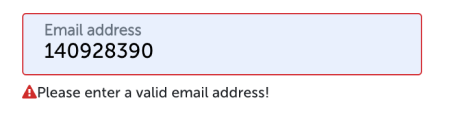
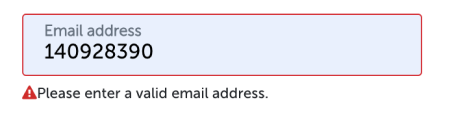
Avoid using exclamation points when its not necessary because it sounds like we’re yelling to the reader. Hospitality, which is one of our tones of voice, should always be understanding and embracing with our users. We must avoid large displays of emotion to sustain this tone.
14.1. How to use?
- But of course there will be points that we are very excited about. Use it in enthusiastic expressions, but not too often.
- While using exclamation point please always keep in mind that we never shout our customers.
- Additionally, exclamation marks are one of the only punctuation marks we can use at the end of sentences in headings.
- Be careful, if you are using the exclamation point as a visual element, do not use it in the text.
- In some local languages, such as Arabic, the exclamation point can carry awkward or humiliating connotations. It is advisable to consult with a local content designer or translator before using it.
15. Ellipses
We don’t use ellipses when providing direct information. However, they can be used in more narrative contexts, such as blog posts. Remember that ellipses create a more ornate style of writing, which can be more literary but may also make understanding more difficult.
15.1. Abbreviations
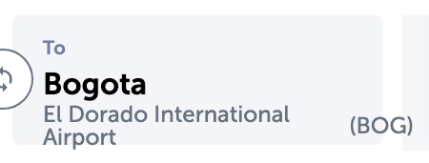
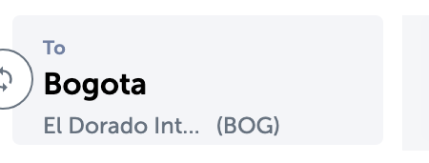
Use ellipses when long expressions do not fit into the specified component in the UI.
15.2. Indicating omission of words
Use ellipses to show that words have been omitted from a quoted passage.
15.3. Indicating a trailing off or pause in thought
Use ellipses to indicate a trailing off or hesitation in speech or thought.
15.4. Creating a sense of suspense or unfinished business
Use ellipses to create suspense or indicate that something more is to follow.
16. Emojis
Emojis are one of the indispensable elements of today’s world. So much so that we can even refer to it as a punctuation mark. But we establish a respectful relationship with our users. Using too many emojis may looks reckless.
16.1. How to use?
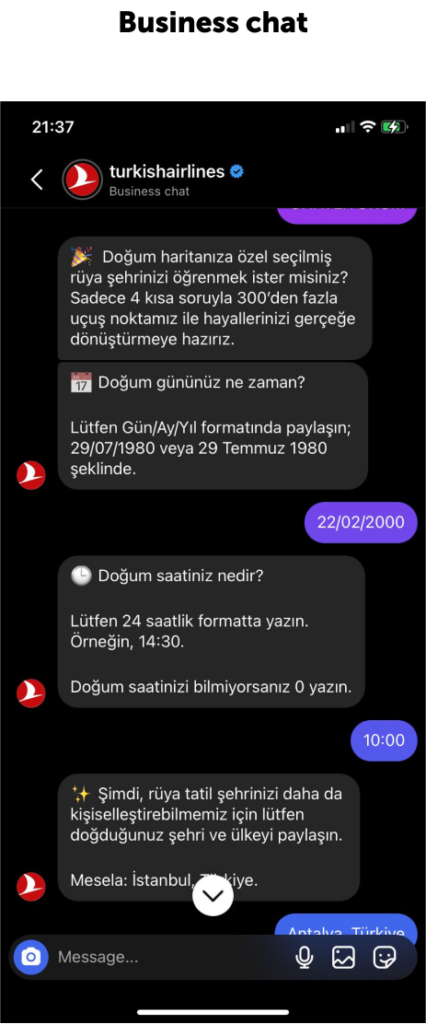
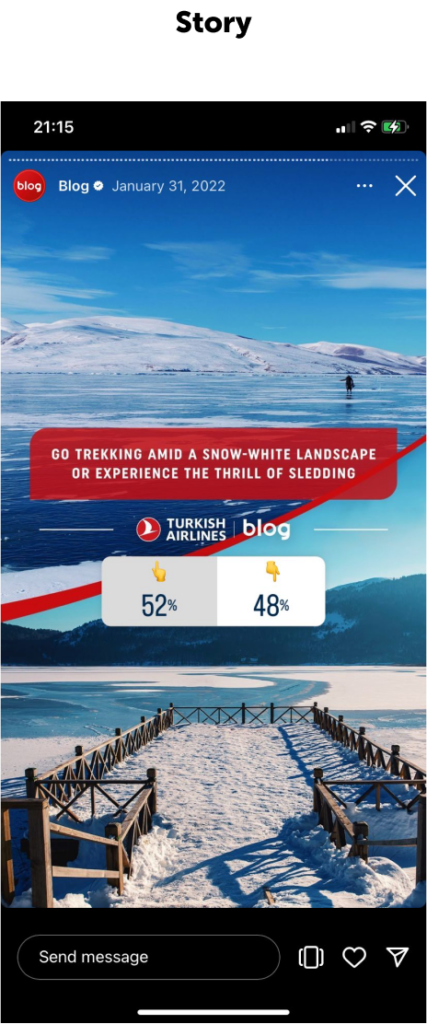
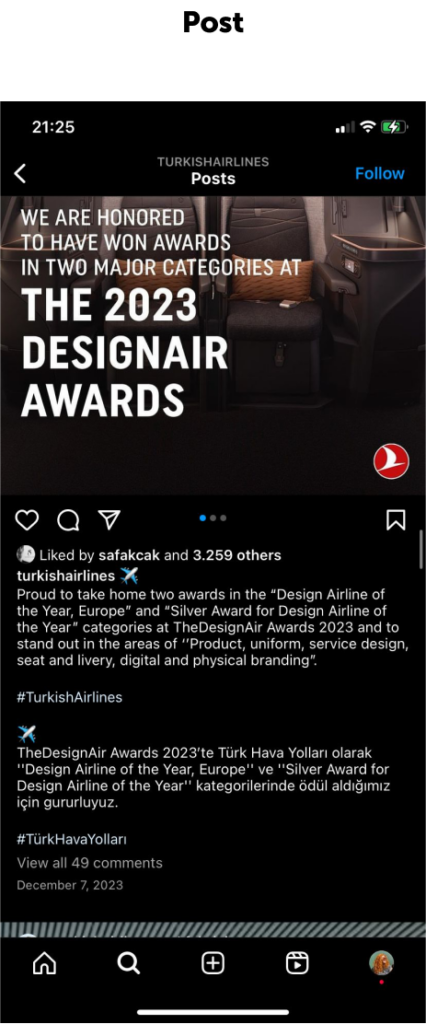
Use it only when sending notifications, creating a story on social media or replying a question on business chat and follow the rules.
16.2. Be sure to use it at the beginning or end of the sentence
Using it between sentences is not accessible and will disturb voice system users.
🚀✈️ Flight TK123 ✈️ is ✈️boarding now at ✈️Gate 12B 🚀! Please proceed ✈️ to the gate 🚀 immediately. ✈️🛫🚀🚀
Flight TK123 is now boarding at Gate 12B. Please proceed to the gate. ✈️
16.3. Don’t use more than two emojis next to each other
It creates visual pollution and creates a frivolous perception.
Welcome to our new lounge! 🛋️✨🌟😊
Welcome to our new lounge! 🛋️✨
16.4. Don’t use emojis that can have different meanings
Choose emojis that will have the same meaning for everyone.
Enjoy complimentary Wi-Fi on all our flights! 💩
Enjoy complimentary Wi-Fi on all our flights! 📶
16.5. Keep an eye on emoji codes
When using emojis in mobile notifications, remember that each emoji has a text code (like :smilingface:). These codes count towards the character limit. So, while emojis add fun, make sure to double-check the total character count to avoid cutting off your message.
16.6. Best cases in several channels
17. Equal signs
This is one of the punctuation marks we use least. You may not even come across it on the site at all. But if there are situations where you will need to use it, you can follow the steps below.
17.1. How to use?
17.1.1. Step 1
First of all think about the words you can use instead of this sign such as ‘’equal, even, same, like, one, symmetrical, etc.’’.
17.1.2. Step 2
If there isn’t enough room for these words, see if you can use another structure.
17.1.3. Step 3
If you have tried them all and still feel like you need it, you can use it this time.
17.1.4. Step 4
But when using it, remember that it will spoil the readability, so try not to use it in sentences.
18. Greater than and less than
We rarely use greater than and less than because they resemble the UI element arrow.
18.1. How to use?
18.1.1. Step 1
When you need to use these signs, first check whether you can express your need with words.
18.1.2. Step 2
You can use expressions such as “before, after, direct, move, forward, back, go, view, etc.”
18.1.3. Step 3
If there is not enough space to express it with words, try other ways to express it with punctuation marks such as comma, slash, em dash.
18.1.4. Step 4
However, if your need is still not met, you can use it this for time.
19. Parentheses
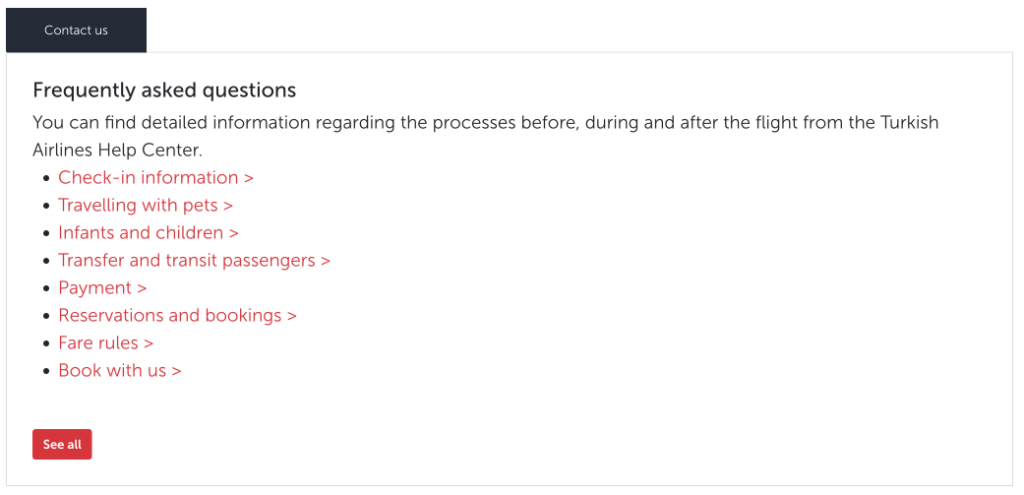
We use parentheses in many places. Always use it to simplify meaning and increase understandability. Be careful not to use it unnecessarily and to avoid repeating the information in parentheses elsewhere. Before and after use, consider whether this information could be provided in another way.
19.1. How to use?
19.1.1. Use it to explain easily
Where you need fewer words to make it easier to read, use parentheses.
Infant Passengers aged 0-2 years
Baby Passenger (0-2 Years)
19.1.2. Passenger number display
In optional passenger number displays, the plural suffix is used in parentheses.
19.1.3. When you are writing code next to name use parentheses
Now almost everyone knows what these codes refer to. You don’t need to explain at length. Bracket it and keep writing.
Sabiha Gökçen (SAW)
Ticket Number (PNR)
19.1.4. Explain it with parentheses
If there is a special situation that needs to be explained use parentheses.
20. Percentages
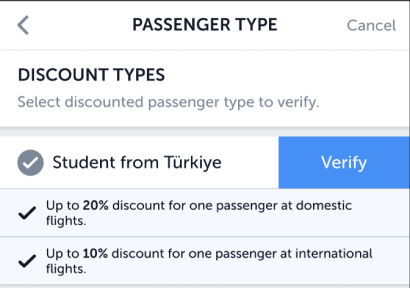
20.1. How to use?
- Expressing numerical values as percentages may not always be easy for readers.
- Try to represent simple expressions, such as multiples of 10, as percentages.
- Users are accustomed to seeing discounts in percentages, so you may need to find different expressions for other situations.
Now your Miles are worth 200% more!
Now your Miles are 2 times valuable!
To redeem extra baggage you now only need to use 50% of the Miles. So, instead of redeeming 1,000 Miles, you only need to redeem 500 Miles!
To redeem 1,000 Miles worth of extra baggage, all you have to do is redeem 500 Miles!
20.2. Where to use?
20.2.1. Use it when describing the discount rate
Otherwise it will make it harder to understand for other situations.
21. Periods
Welcome to the most frequently used punctuation mark: the period. This tiny dot is essential in bringing clarity and closure to our sentences. While we often find it at the end of nearly every statement, the period has other critical uses too. Let’s dive in and explore its importance and versatility.
21.1. How to use?
21.1.1. Ending sentences
Use a period to end a sentence. Headings are also sentences. However, we do not use periods at the end of these sentences.
21.1.2. Abbreviations
Use periods in abbreviations to indicate that letters have been omitted. For more, check abbreviation.
“Dr. Smith”
“Mr. Jones”
“etc.”
“e.g.”
“i.e.”
21.1.3. Decimal points
Use periods as decimal points in numbers. Cents are separated by periods in currencies such as euros and dollars. For more info, check currencies.
$3.50
21.1.4. Initials
Use periods between initials in names.
J.K. Rowling
W.E.B. Du Bois
22. Pipes
Pipe is a UI element for us. When used, it is used as a visual element, not as a text element.
22.1. How to use?
22.1.1
It is used between departure and arrival times on ticket sales and ticket related screens.

22.1.2
It can be placed among the contents when describing an opportunity.
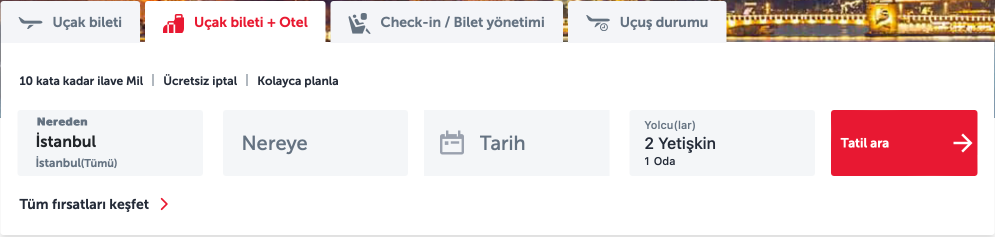
22.1.3
When writing a meta title, the items are separated by pipes.
23. Plus and minus
- We rarely use the plus sign when there is a character limit or when it is needed.
- Do not use the minus sign as it will interfere with other dashes.
- When using these signs, be careful not to impair clarity.
- Avoid using it in sentences as much as possible.
- Do not write difficult mathematical expressions using these signs. Use it as easily as possible.
23.1. How to use?
23.1.1. As conjunction
Use a plus when you need to use ampersand, since ampersand is the symbol of Miles&Smiles.
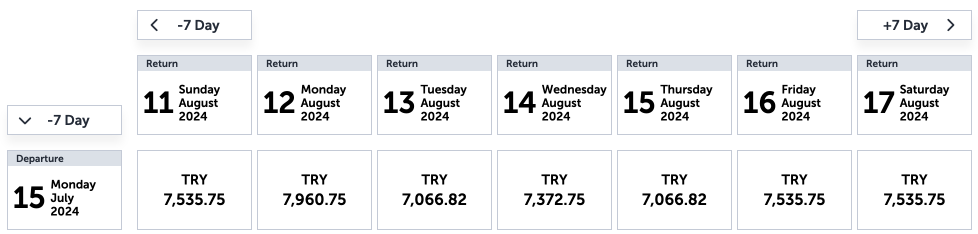
23.1.2. Showing departure and return ranges
Need to say ‘more’ and have a limited space? Use plus and minus without spacing before the number.
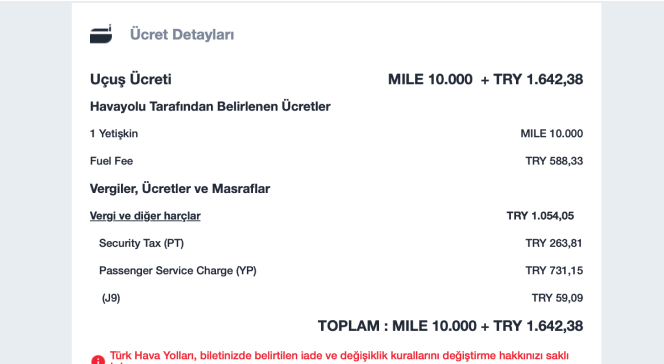
23.1.3. As a part of an addition
If the passenger buys the ticket with miles and money, you need to use it as an add operation. Here is an example from an email.
23.1.4. Price and miles changes
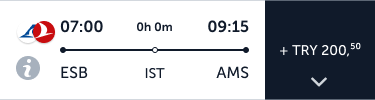
When our users select a flight, we also show alternative flights within their chosen date range. Of course, the price of each flight is not the same. We follow a similar logic for price and miles changes. When there is a price change:
- If it is in a chart, place the plus or minus sign with a space before the currency symbol. (e.g., + USD 38.00)
- If it is in plain text, place the signs before the number and indicate the currency symbol at the end. (e.g., “+ 38.00 USD will be charged to your ticket.”)
23.1.5. Ages
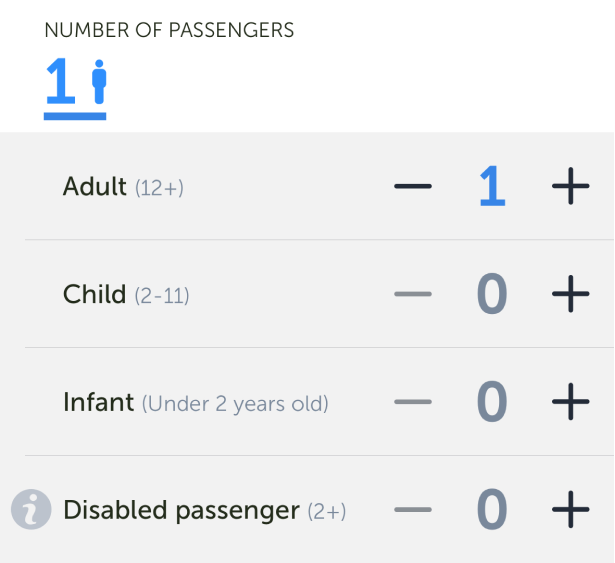
Our website and mobile application are one of the products that offer the broadest experience in terms of inclusiveness. Since we serve different age groups such as babies, children and adults, we have to learn the minimum ages. In this case, write the age and use the “+” symbol without any spaces.
24. Question Marks
Question marks (?) are punctuation marks used to indicate a direct question. They help to convey the interrogative tone of a sentence, signaling to the reader that an answer or response is expected.
24.1. How to use?
24.1.1. Ending questions
Use a question mark at the end of direct, rhetorical, tag and any other questions.
24.1.2. Indicating uncertainty
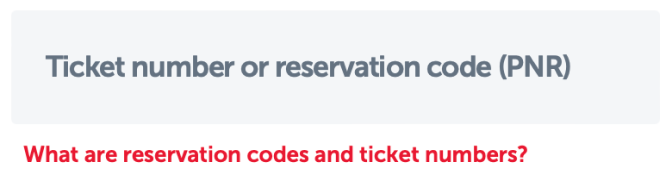
Use a question mark in parentheses to indicate uncertainty or doubt about a piece of information.
25. Quotation Marks
In English, the standard is to use double quotation marks (” “). However, different languages may have their own conventions, often using single quotation marks (‘ ‘). Always check the specific requirements for the language to ensure correct usage or consult with a local content designer or translator before ruling it.
25.1. How to use?
25.1.1. Direct speech
Use quotation marks to enclose spoken words or dialogue.
25.1.2. Quoting text
Use quotation marks to cite text from another source.
25.1.3. Titles of short works
Use quotation marks for titles of articles, chapters, songs, and other short works.
25.1.4. Highlighting words or phrases
Use quotation marks to emphasize specific terms or to indicate irony.
25.2. What if there is a quote inside a quote?
You can use single quotation marks inside double quotation marks to indicate a quote within a quote. Or if the language requires otherwise, do the opposite. (Double quotation marks inside single quotation marks)
26. Semicolons
Semicolons (;) are punctuation marks that create a pause longer than a comma but shorter than a period. They link closely related ideas and help clarify complex lists.
26.1. How to use?
26.1.1. Linking independent clauses
Use a semicolon to link two closely related independent clauses that are not joined by a conjunction (e.g., and, but, or).
26.1.2. With conjunctive adverbs
Use a semicolon before conjunctive adverbs (e.g., however, therefore, moreover) that link independent clauses, and follow the conjunctive adverb with a comma.
26.1.3. Complex lists
Use semicolons to separate items in a list when the items themselves contain commas, to avoid confusion.
27. Slashes
Slashes are punctuation marks that we used as conjunctions and seperation. You can use in text areas where you need to write ‘and’, ‘or’, etc. You must leave a space before and after using slash.
27.1. How to use?
27.1.1. Indicating alternatives
Use a slash to indicate alternatives between words or phrases.
27.1.2. Conjunction
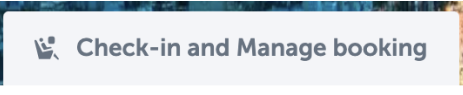
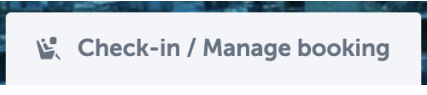
Use a slash instead of the word ‘and’, when you give two different information in the same place, especially if text space is limited in the UI.
27.1.3. Separation
If you have a single text area to give more than one different piece of information, split the text using slash.