Abbreviations
1. Introduction
1.1. What do we mean by abbreviations?
Abbreviations are an essential part of all languages. Although we tend to avoid using them in interfaces to ensure content is fully understandable in an international context, we sometimes use them due to character limits imposed by certain components. Of course, such usage does not mean leaving our users in confusion. Our core principle is to use abbreviations that are widely known, understood, tested with target users, and that facilitate comprehension during scanning.
1.2. Abbreviations projection in Horizon
We can generally divide them into two:
1.2.1 Abbreviations everyone thinks they know
Just writing an abbreviation might cause confusion for users because it’s not always what they think it is. On top of that, abbreviations can make the average user work a little harder to understand what’s being said. Even with all this, if something is super well-known as an abbreviation and you use it all the time in everyday speaking, then that might be okay. But, like any assumption, this one can easily be wrong.
No matter what the topic is, test out your content. Things might not be as clear as you think. Here’s another thing to remember especially that we mostly use abbreviations to save space. We recommend you avoid using them in a paragraph, especially.
1.2.2 Abbreviations in aviation terminology
Obviously, these are more technical and people who already know them will understand them right away. You’ll see these a lot in interfaces designed for businesses talking to other businesses (B2B). Don’t use these kinds of abbreviations in interfaces meant for regular people (B2C).
2. Usage
2.1. Amounts
Use “m” for millions, “bn” for billions, and “k” for thousands in limited spaces. Generally, do not abbreviate amounts in the hundreds to avoid confusion.
Consult with the local UX writer for appropriate abbreviations in other languages.
5 million GBP is 5m GBP
3 billion USD is 3bn USD
10,000 TRY is 10k TRY
300 TRY remains 300 TRY
2.2. Addresses
Use “St.” for Street, “Ave.” for Avenue, “Bldg.” for Building, “Rd.” for Road, “Blvd.” for Boulevard, “Apt.” for Apartment, and “Ste.” for Suite in limited spaces.
Consult with the local UX writer for appropriate abbreviations in other languages.
Baker Street becomes Baker St.
Fifth Avenue becomes Fifth Ave.
Empire State Building becomes Empire State Bldg.
Elm Road becomes Elm Rd.
Sunset Boulevard becomes Sunset Blvd.
Apartment 5B becomes Apt. 5B
Suite 200 becomes Ste. 200
2.3. Countries
Do not use country abbreviations in sentences unless they are from countries known by their abbreviations.
Use recognized abbreviations like “UK” and “USA” directly in text without needing to spell out the full country name.
Türkiye: TR
Turkish Rep of Nor. Cyprus: KKTC
United Kingdom: GB
United States of America: USA
Canada: CA
Australia: AU
France: FR
Italy: IT
Spain: ES
Japan: JP
China: CN
India: IN
Brazil: BR
Russia: RU
Mexico: MX
South Africa: ZA
New Zealand: NZ
South Korea: KR
When referring to geographical locations, GB stands for Great Britain, while UK refers to the full name of the country, the United Kingdom.
However, in language abbreviations to avoid confusion with Ukrainian (UK), GB is always used to represent British English.
2.4. Measurements and Dimensions
Always include a space between the number and the unit of measure, and use open punctuation (no periods). If the number and unit are used as an adjective, connect them with a hyphen.
Use the metric system for Australia, Brazil, Canada, France, and the UK.
In the USA, use the imperial system, providing metric equivalents in parentheses when appropriate.
2.4.1. Length
- Metric: meter (m), centimeter (cm), millimeter (mm)
- Imperial: foot (ft), inch (in)
The runway measures 2,500 m.
A 2,500-meter runway.
The aircraft’s wingspan is 80 ft (24.38 m)
An 80-foot wingspan.
2.4.2. Weight
- Metric: kilogram (kg), gram (g)
- Imperial: pound (lb), ounce (oz)
The baggage allowance is 23 kg.
A 23-kilogram allowance.
The cargo weighs 50 lbs (22.68 kg).
A 50-pound cargo.
2.4.3. Volume
- Metric: liter (L), milliliter (mL)
- Imperial: gallon (gal), fluid ounce (fl oz)
The fuel tank capacity is 200 L.
A 200-liter fuel tank.
The tank has a capacity of 50 gallons (189.27 L).
A 50-gallon tank.
2.4.4.
Please check the AP Style handbook for others.
50 km/h
35 mph
128 MB of RAM
on hold for 3 minutes
3.4-GHz processor
2-day workshop
2.5. Documents
Use the abbreviation directly when it is widely recognized and understood by your audience.
Avoid unnecessary capitalization if the abbreviation is used in the middle of a sentence; however, keep it capitalized if it starts a sentence.
In formal writing or when first introducing the abbreviation, you may want to include the full name followed by the abbreviation in parentheses.
Portable Document Format: PDF
Portable Network Graphics: PNG
Joint Photographic Experts Group: JPEG
Microsoft Word Document: DOC or DOCX
Hypertext Markup Language: HTML
Extensible Markup Language: XML
Comma-Separated Values: CSV
Adobe Photoshop Document: PSD
Text File: TXT
Microsoft Excel Spreadsheet: XLS or XLSX
2.6. Months and Days
When abbreviating days and months, take the first three letters.
Avoid using shortened forms of months and days in full sentences. Always spell them out to maintain clarity.
Abbreviated versions may be used in specific contexts such as forms, calendars, or when displaying dates.
Consult with the local UX writer for appropriate abbreviations in other languages.
January: Jan
February: Feb
March: Mar
April: Apr
May: May
June: Jun
July: Jul
August: Aug
September: Sep
October: Oct
November: Nov
December: Dec
Monday: Mon
Tuesday: Tue
Wednesday: Wed
Thursday: Thu
Friday: Fri
Saturday: Sat
Sunday: Sun

Where brevity is the main consideration, the Chicago Manual of Style preference would be for; Su, M, Tu, W, Th, F, and Sa.
Always prefer the three-letter abbreviation for days and months. These are more clear and concise versions for those who speaks English in global.
2.7. Time
In plain text, use “hr,” “min,” and “sec” as recommended by AP Style.
In situations with limited space, single-letter abbreviations are acceptable without spacing:
- h for hour
- m for minute
- s for second

Avoid using shortened forms in full sentences; use the full words for clarity when possible.
The meeting will last for 2 hr.
The meeting will last for two hours.
2.8. Latin Phrases
Latin abbreviations can be useful in specific contexts particularly in formal documentation, legal texts, or technical specifications.
e.g. (exempli gratia): Used to provide examples.
i.e. (id est): Used to clarify or explain something further.
vs. (versus): Used in comparisons.
etc. (et cetera): Used to indicate that other similar items are included.
cf. (confer): Used to suggest comparing information.
While Latin abbreviations can provide clarity and precision, their usage should be approached with caution to ensure inclusivity. To maintain inclusivity:
2.8.1. Use sparingly
Limit the use of Latin abbreviations to contexts where they add significant value and clarity.
2.8.2. Provide explanations
If using Latin abbreviations, consider defining them at first use to ensure understanding.
2.8.3. Opt for clarity
Whenever possible, use plain language that is accessible to all users.
Please bring necessary documents, e.g., passport, visa.
Please bring necessary documents, such as your passport and visa.
2.9. Addressing Titles
In Turkish Airlines we use two types of title abbreviations:
2.9.1. Gender Titles
To identify the user’s gender, we include abbreviations such as “Mr.” and “Ms.” These are typically displayed on ticketing screens and profile pages.
2.9.2. Academic Titles
Users can also add academic titles such as “Prof.” (Professor), “Assist. Prof.” (Assistant Professor), “Dr.” (Doctor), “Doc.” (Doctor), etc. These titles are used as abbreviations before the name, followed by a period.
Mr. John Smith
Ms. Jane Doe
Dr. Emily Johnson
Prof. Richard Brown
2.10. Aviation Terms
Please avoid using these abbreviations when communicating regular users. Only adapt them if prepare a technical document.
- ATC: Air Traffic Control
- AOC: Air Operator Certificate
- FAA: Federal Aviation Administration
- FBO: Fixed Base Operator
- ICAO: International Civil Aviation Organization
- IATA: International Air Transport Association
- VFR: Visual Flight Rules
- IFR: Instrument Flight Rules
- TSA: Transportation Security Administration
- NAV: Navigation
- CRM: Crew Resource Management
- DME: Distance Measuring Equipment
- A320: Airbus A320 (specific aircraft model)
- B737: Boeing 737 (specific aircraft model)
- PAX: Passengers
- AOG: Aircraft on Ground
2.11. Frequently Asked Questions
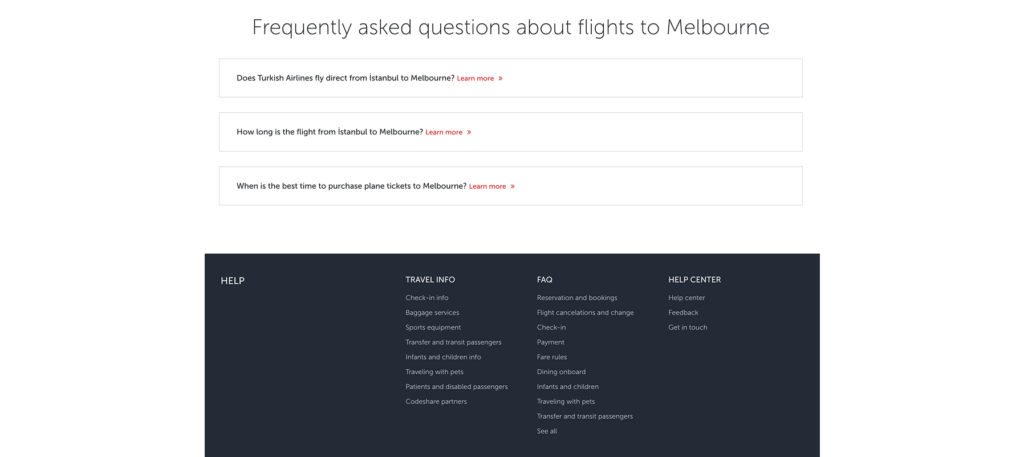
The abbreviation “FAQ” is widely recognized by our users. Therefore, in navigation menus, we use the abbreviation form. However, when it appears as a heading under a specific topic, it should be written out in full.
To sum up, use the full phrase “Frequently asked questions” when it serves as a page heading, but use the abbreviation “FAQ” in navigational links leading to that page.